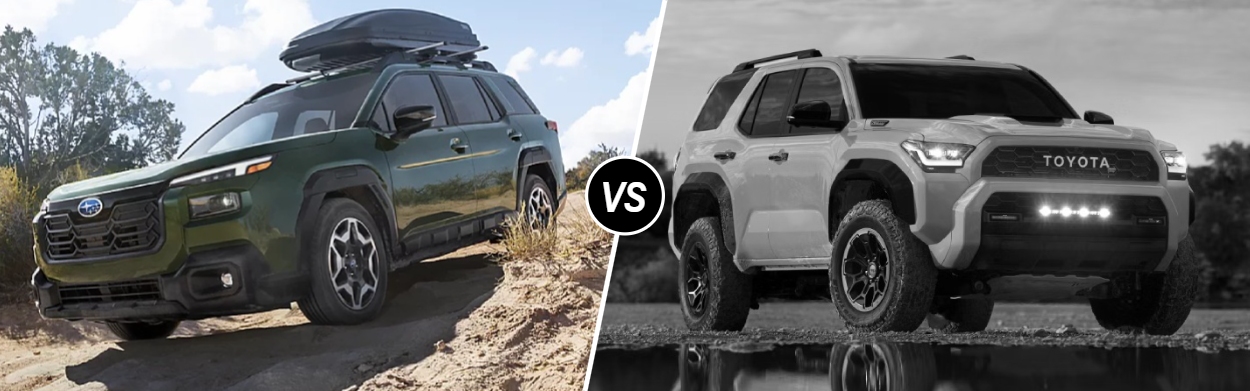
The 2026 Subaru Outback vs 2026 Toyota 4Runner comparison brings together two capable SUVs with very different personalities. The 2026 Toyota 4Runner is a rugged body-on-frame SUV with available 2WD, Part-Time 4WD, or Full-Time 4WD, plus available off-road hardware on specialized trims. The all-new 2026 Subaru Outback takes a more balanced approach, giving shoppers standard Subaru Symmetrical All-Wheel Drive, standard X-MODE® with Hill Descent Control, 8.7 inches of ground clearance, upgraded technology, and a more refined everyday driving experience. At Flatirons Subaru in Boulder, CO, we see many drivers looking for capability without sacrificing comfort, ease of use, or modern safety support. That is where the Outback stands apart. It is designed for the daily commute, mountain access roads, trailhead parking lots, and weekend gear-hauling, all while offering a quieter cabin, a practical cargo area, and newly available hands-free highway assistance on select trims.
| Feature | 2026 Subaru Outback | 2026 Toyota 4Runner |
|---|---|---|
| Standard full-time all-wheel drive | Yes | No |
| Standard X-MODE® traction management | Yes | No |
| Standard 12.1-inch touchscreen | Yes | No |
| Standard 12.3-inch full digital gauge cluster | Yes | No |
| Wireless Apple CarPlay® and Android Auto™ integration | Yes | Yes |
| Available Hands-Free Driving Assist | Yes | No |
| Available Emergency Stop Assist with Safe Lane Selection | Yes | No |
| Raised roof rails with 800-pound static load capacity | Yes | No |
| Available turbocharged engine | Yes | Yes |
| Available third-row seating | No | Yes |
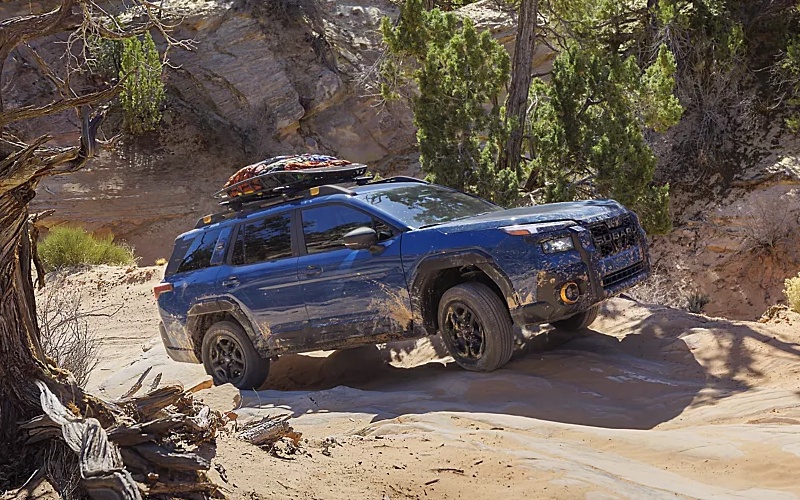
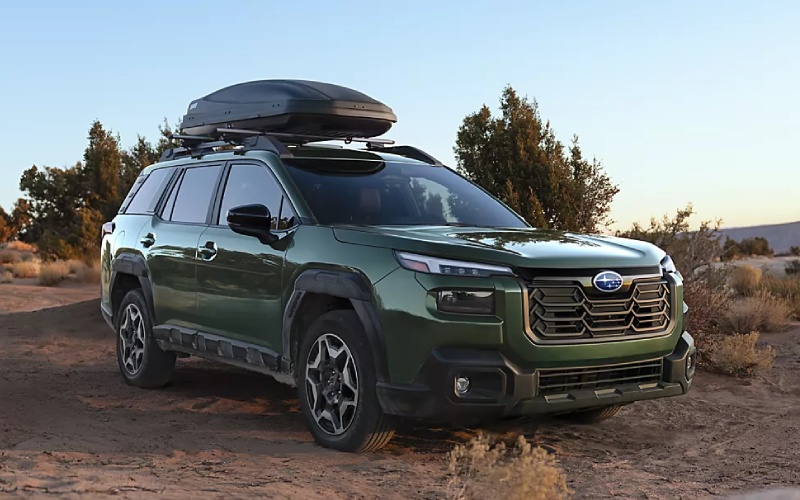
The all-new Subaru Outback has moved in a bolder direction while preserving the practical proportions that made it a long-running favorite. Its upright front fascia, larger grille, vertical headlight placement, boxier profile, and flatter roofline give it a stronger SUV stance than past generations. The Toyota 4Runner also has a commanding look, with high-clearance design cues, a muscular stance, and TRD-focused off-road styling on certain trims. Still, the Subaru offers a smart blend of rugged design and everyday convenience. Raised roof rails are standard, and Subaru rates the system for an 800-pound static load capacity and a 220-pound dynamic load rating. Crossbar measurement markers help with accessory placement, and Subaru even notes lateral load capacity from the sides of the crossbars. That matters for drivers carrying bikes, boards, cargo boxes, or camping equipment. The Outback also offers newly available 19-inch wheels on select trims, while Wilderness models add all-terrain tires, extended lower cladding, an aluminum alloy front skid plate, and Anodized Copper-finish accents. The result is adventurous without becoming cumbersome.
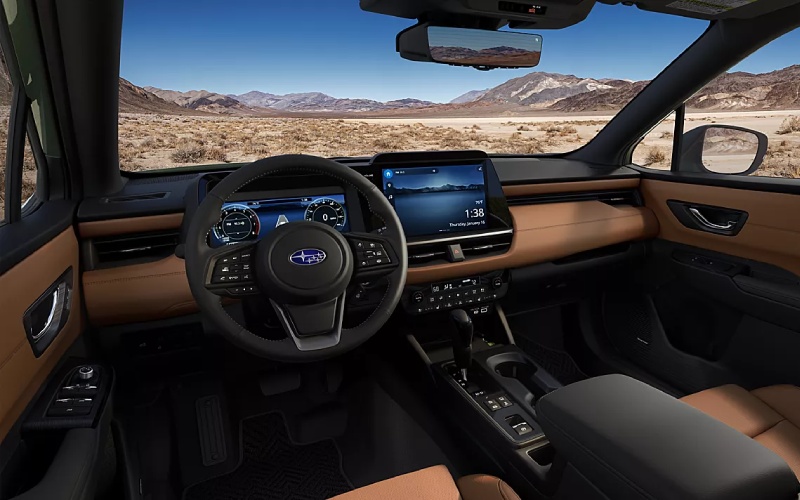
Inside, the Subaru Outback feels purpose-built for drivers who want capability without a truck-like cabin experience. Subaru redesigned the interior with a calmer layout, improved materials, and more space than any previous Subaru Outback. Standard technology includes a new Subaru 12.1-inch Multimedia system with wireless Apple CarPlay® and Android Auto™ integration, paired with a 12.3-inch full digital gauge cluster on every trim. That gives the Subaru a major advantage over the 4Runner, which starts with an 8-inch touchscreen and offers its larger 14-inch Toyota Audio Multimedia touchscreen only on select grades. The Outback also keeps climate controls on dedicated hard buttons and knobs, a thoughtful touch for quick adjustments on busy routes in Boulder, CO. Available upgrades include leather-trimmed upholstery, perforated Nappa leather-trimmed upholstery, heated and ventilated front seats, heated rear outboard seats, a heated steering wheel, wireless device charging, and a Harman Kardon premium audio system. While the 4Runner offers available third-row seating, the Outback focuses on five-passenger comfort, easier entry, supportive low-fatigue seats, and a flexible cargo area that better suits most daily routines.
Mechanically, the Subaru Outback is engineered around confidence, predictability, and comfort. Every trim comes standard with Subaru Symmetrical All-Wheel Drive, which is a significant distinction from the Toyota 4Runner lineup, where drivetrain choice depends on trim and configuration. Toyota shoppers can choose available 2WD, Part-Time 4WD, or Full-Time 4WD, and that flexibility has appeal for certain off-road priorities. For many Colorado drivers, however, standard full-time traction is easier to live with because no extra decision is needed when pavement, gravel, or uneven surfaces change. Subaru also revises X-MODE® for better off-road performance, and it can now be toggled using a steering wheel-mounted switch. The Outback benefits from a revised all-wheel-drive system with faster center differential lockup, reduced wheelspin, and steering angle data for improved stability. A version of the WRX dual-pinion electronic power steering rack adds a more direct, natural steering feel. The 4Runner’s TNGA-F body-on-frame chassis is tough, but the Subaru’s unibody-style road manners make it smoother, easier to maneuver, and more comfortable for everyday driving.
The powertrain story depends on driver priorities. The Toyota 4Runner offers strong numbers, including an i-FORCE engine rated at 278 horsepower and 317 pound-feet of torque, plus an available i-FORCE MAX hybrid powertrain with up to 326 horsepower and 465 pound-feet of torque. Those figures will attract shoppers focused on maximum output and serious trail builds. The Subaru Outback counters with a more balanced, road-friendly lineup. A revised 2.5-liter SUBARU BOXER® engine produces 180 horsepower and 178 pound-feet of torque, while the available 2.4-liter direct-injection turbocharged SUBARU BOXER® engine delivers 260 horsepower and 277 pound-feet of torque on XT models and Wilderness. Both Subaru engines pair with a Lineartronic® CVT with 8-speed manual shift mode and standard Symmetrical All-Wheel Drive. For daily driving, the Subaru feels composed and responsive, especially with the turbo engine. It also maintains a lower cargo floor and easier step-in height than many larger body-on-frame SUVs, so loading gear or helping passengers aboard is simpler. That practical usability is a key reason our team recommends the Outback.
Safety is one of the clearest advantages for Subaru in this comparison. Every Outback includes the latest-generation EyeSight® Driver Assist Technology, with features such as Front Pre-Collision Braking, Adaptive Cruise Control, Lane Centering, Lane Departure Warning, Lane Sway Warning, Acceleration Override Assist, Front Cross Traffic Braking, a Vibrating Haptic Steering Wheel, and Emergency Stop Assist. Subaru enhanced the system with three forward-facing cameras, newly added radar sensors, and a wider-angle mono camera to help spot pedestrians and cyclists sooner. Select trims add Hands-Free Driving Assist for designated highways up to 85 mph with driver supervision, Emergency Stop Assist with Safe Lane Selection, Active Lane Change Assist, Pre-Curve Speed Reduction, and Automatic Resume Assist. The Toyota 4Runner includes Toyota Safety Sense™ 3.0, and that suite is meaningful, but Subaru’s newly available hands-free highway support and emergency lane selection technology provide a forward-looking advantage. For drivers navigating traffic, highway merges, and canyon approaches, the Outback’s safety technology supports a calmer, more attentive drive.
Drivers comparing 2026 Subaru Outback vs 2026 Toyota 4Runner often find that Subaru delivers the capability needed most often, along with better everyday comfort and standard traction from the start.
For shoppers who want capability without excess bulk, we recommend visiting our showroom and seeing how naturally the Outback fits Colorado driving.
The Toyota 4Runner remains a strong choice for shoppers who prioritize body-on-frame construction, available third-row seating, and specialized off-road grades such as TRD Pro or Trailhunter. However, the Outback is the smarter fit for many local drivers because it blends standard all-wheel-drive confidence, useful ground clearance, a quieter and roomier cabin, advanced driver-assistance technology, and everyday maneuverability. The 2026 Subaru Outback vs 2026 Toyota 4Runner decision comes down to how an SUV will actually be used. If your drive includes commuting, errands, mountain access, trailhead gear, pets, passengers, and long highway stretches, Subaru delivers capability without making daily life harder. At Flatirons Subaru, our team in Boulder, CO can help compare trims such as Premium, Limited, Touring, Limited XT, Touring XT, and Wilderness, so your next SUV matches your comfort, technology, and adventure priorities. The all-new 2026 Subaru Outback brings a confident new shape to a proven formula, and it is ready for a closer look.