


Subaru vs. Toyota for High-Altitude Mixed Terrain in Boulder, CO
Flatirons Subaru – Subaru vs. Toyota for High-Altitude Mixed Terrain in Boulder, CO
Life in Boulder often means dry pavement on US 36 before sunrise, washboard gravel up Fourmile or Lefthand Canyon by lunch, and a slick, slushy climb toward Nederland or Eldora by evening. For shoppers comparing Subaru and Toyota, the question is less about commuting comfort and more about confident control when surfaces change without warning. At Flatirons Subaru, we help in-market drivers compare both brands through a single, specific lens—predictable traction and real-world usability on Boulder’s high-altitude mixed terrain—so the next trailhead run or stormy canyon descent feels calm and controlled.
Both brands build capable vehicles, and many Boulder shoppers understandably cross-shop Subaru SUVs and wagons alongside Toyota crossovers and SUVs. The key differences start with how each brand approaches all-weather traction. Subaru designs around Symmetrical All-Wheel Drive, a full-time system paired with a low-mounted SUBARU BOXER® engine that keeps weight balanced and power flowing to all four wheels continuously. Toyota offers multiple AWD systems across the lineup, including on-demand setups that route torque rearward when slip is detected and hybrid e-AWD configurations that power the rear axle with an electric motor. Each approach can move you forward in snow, but the Subaru system emphasizes consistent, always-on grip—useful when one mile of dry asphalt turns to shaded ice on Flagstaff Road without warning.
On steep gravel or snow-packed grades, predictability matters just as much as peak traction. With Subaru, the longitudinal powertrain layout and Symmetrical All-Wheel Drive aim for a linear feel in transitions—accelerating out of tight, uneven switchbacks or easing over ruts without the pause that can occur when an on-demand system calibrates and engages the rear axle. Toyota offers trims with advanced torque distribution as well, particularly in specific off-road-focused models, but broad, everyday access to full-time traction across Subaru body styles is a Boulder-friendly advantage when conditions change three times between Pearl Street and the Peak to Peak Highway.
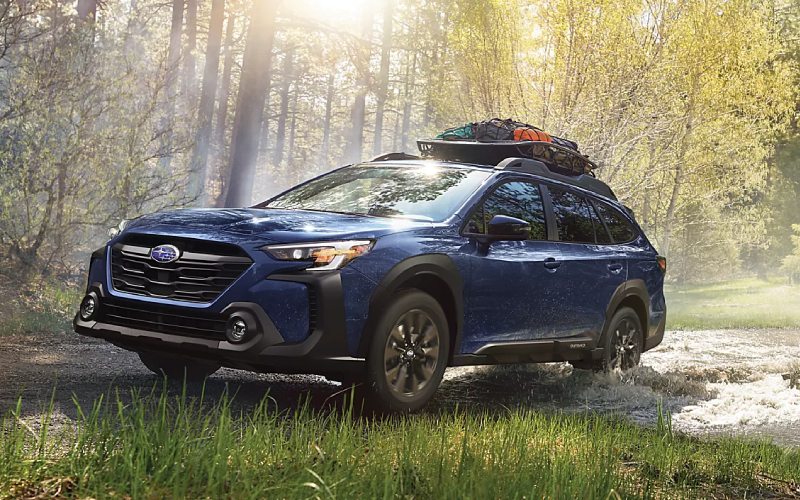
Ground clearance also shapes how relaxed a gravel approach feels. Many Subaru crossovers deliver 8.7 inches of clearance, and Wilderness models increase that figure further for extra margin over ruts, snow berms, and embedded rocks on seasonal roads—up to as high as 9.5 inches depending on model. Toyota provides strong clearance on specific off-road trims and body-on-frame SUVs, and those rigs can be excellent for specialized use. For the daily Boulder mix—downtown parking, canyon washboards, and a muddy trailhead spur—a Subaru wagon or SUV with generous clearance and a car-like footprint often hits the sweet spot.
Traction-enhancing drive modes can turn a sketchy stretch into a non-event. Subaru X-MODE optimizes throttle, transmission mapping, and braking logic for low-grip surfaces, with available Dual-function X-MODE adding Snow/Dirt and Deep Snow/Mud selections on many models. Hill Descent Control can hold a set speed on loose or icy downhills—helpful on shadowed sections near trailheads. Toyota offers off-road modes and downhill assist on select models as well. The practical difference for many Boulder households is availability—Subaru brings these snow-and-gravel-friendly tools to a wide swath of trims, so the capability you test on a demo loop is the capability you use all winter on CO 119.
Visibility and vehicle feedback reduce stress when conditions tighten. Subaru cabins often prioritize upright glass, low cowl heights, and big side mirrors, supporting clear sightlines for lane merges on US 36 and rock-spotting on uneven two-tracks. Steering and brake tuning aim for natural responses that complement the balanced chassis. Toyota designs also deliver excellent visibility on many models, and shoppers should always test sightlines. In our local experience, the Subaru emphasis on a low-mounted SUBARU BOXER® engine and consistent AWD responses gives drivers intuitive feedback when patches of sand or slush appear mid-corner.
Daily usability matters, too. Subaru wagons and SUVs commonly feature raised roof rails and available integrated crossbar systems that make it easy to mount a ski rack before a dawn Eldora run or a cargo box for a weekend at Brainard Lake. Inside, wide cargo openings and sturdy seatback materials handle muddy boots and damp gear. Toyota offers roof rails and useful cargo solutions across many models as well. For shoppers who load gear weekly, the built-in tie-down logic and easy-to-reach rail designs on key Subaru models simplify the routine.
Safety technology is strong for both brands, and shoppers should try the systems in real traffic. Subaru EyeSight® Driver Assist Technology—standard on most Subaru models—uses stereo cameras to support features like Advanced Adaptive Cruise Control with Lane Centering and Pre-Collision Braking. Toyota Safety Sense is standard across much of the Toyota lineup and also provides robust driver assistance functionality. On Boulder’s rolling, high-altitude corridors, many of our guests appreciate how EyeSight® modulates speed smoothly around cyclists and tour buses, and how Lane Centering reduces micro-corrections on gusty, open stretches near McCaslin.
Longevity and support round out the picture. Subaru owners value long-term durability—97% of Subaru vehicles sold in the last 10 years are still on the road today—and our Factory Trained Teams at Flatirons Subaru use Genuine Subaru Parts and Specialized Tools to maintain that performance. Every service visit includes a complimentary Multi-Point Inspection, and our Flatirons Quick Lane Guarantee helps keep routine oil changes efficient in your schedule. Toyota’s reputation for durability is well earned, too. The differentiator for many Boulder families is how readily accessible all-weather traction and trailhead-ready details are across everyday Subaru trims, backed by local, brand-specific service that understands canyon driving and winter prep.
For an at-a-glance view through Boulder’s high-altitude lens, here is a concise comparison focused on mixed-surface confidence and routine mountain usability:
- AWD philosophy: Subaru emphasizes full-time Symmetrical All-Wheel Drive for continuous traction; Toyota commonly offers on-demand or e-AWD systems that engage rear torque as needed.
- Powertrain balance: Subaru pairs AWD with a low-mounted SUBARU BOXER® engine for a planted feel in quick transitions; Toyota delivers stable dynamics, with feel varying by platform and trim.
- Ground clearance: Many Subaru crossovers provide 8.7 inches, with Wilderness models higher for ruts and berms; Toyota offers strong clearance on select off-road trims and body-on-frame SUVs.
- Snow and gravel modes: Subaru X-MODE and available Dual-function X-MODE are widely offered; Toyota provides terrain modes on select trims with varying availability.
- Downhill control: Subaru Hill Descent Control helps on icy or loose grades; Toyota offers similar functionality on select models.
- Visibility: Subaru cabins frequently feature low cowl heights and large glass for canyon curves and parking; Toyota visibility is model-dependent and should be test-driven locally.
- Roof and cargo utility: Subaru integrates user-friendly roof rails and crossbar solutions; Toyota offers versatile carrying options across many models.
- Safety systems: Subaru EyeSight® is standard on most models and tuned for smooth modulation; Toyota Safety Sense provides broad standard coverage with strong capability.
- Connectivity: SUBARU STARLINKTM supports modern features like Apple CarPlay and Android Auto; Toyota offers comparable smartphone integration across most models.
- Service support: Flatirons Subaru delivers local, high-altitude know-how with complimentary Multi-Point Inspections; Toyota service quality is strong with availability varying by retailer.
So, which brand fits the Boulder use case described here? For households that regularly blend urban errands with gravel connectors and frequent winter driving, Subaru’s always-on, balanced AWD approach—plus generous ground clearance and traction modes offered on mainstream trims—creates a calm, predictable feel that drivers notice immediately. Toyota builds excellent vehicles with compelling off-road trims and efficient hybrids; for mixed-surface confidence baked into the everyday lineup, Subaru aligns closely with the daily reality of Boulder driving.
Choosing a body style can be just as important as choosing a brand. Wagons and compact SUVs offer maneuverability for downtown garages and tight trailhead lots, while three-row SUVs add people and gear capacity for hut trips. Our team helps match body style to route—think Eldorado Canyon parking, Chautauqua mornings, and snow-packed evenings up to Ward—so your vehicle feels right-sized year-round.
If an electrified path is on your radar, Subaru Solterra pairs Symmetrical All-Wheel Drive with EV responsiveness, while Toyota brings multiple hybrid and EV choices. Cold-weather range planning matters at altitude for any EV; strong traction programming and predictable responses matter even more when roads get slick. We can walk through charging strategies for winter weekends, from downtown Boulder to the foothills.
The best way to decide is to feel the differences on local roads. Our product specialists can map a short loop that includes steady climbs, a few rough patches, and a quick freeway merge so you can evaluate traction engagement, visibility, and steering feel in real conditions—just as you will on a Tuesday morning school run or a Saturday ski dash.
Frequently Asked Questions:
Is Subaru Symmetrical All-Wheel Drive really different from Toyota’s AWD on Boulder’s mixed surfaces?
Yes. Subaru’s full-time Symmetrical All-Wheel Drive sends power to all four wheels continuously and works with the low-mounted SUBARU BOXER® engine for balanced responses. Many Toyota systems are on-demand or e-AWD, engaging the rear axle when slip is detected. Both provide traction, but the Subaru setup emphasizes consistent, always-on grip that feels especially natural on alternating dry, sandy, and icy patches.
Do I still need winter tires if my vehicle has Symmetrical All-Wheel Drive?
For Boulder’s extended cold snaps and frequent canyon snowfall, dedicated winter tires are strongly recommended regardless of drivetrain. AWD helps you go; winter tires help you stop and turn on cold, slick surfaces. Our Tire Center can recommend sets tailored to your routes and mount them with proper balancing and a four-wheel alignment if needed.
Which Subaru body style is best if I split time between US 36 commuting and gravel approaches to trailheads?
Many Boulder drivers prefer a wagon or compact SUV for easy parking, strong visibility, and 8.7 inches of clearance. If weekend gear expands—cargo boxes, kid seats, or bikes—stepping up to a midsize SUV adds space without losing all-weather confidence. We will help you compare cargo openings, roof-rail setups, and ride height to match your routine.
How does EyeSight® feel on real canyon and freeway drives compared with other driver-assist suites?
EyeSight® uses stereo cameras to support smooth, natural-feeling Adaptive Cruise Control and Lane Centering. On rolling freeways and gently curving canyons, many drivers notice confident spacing and fewer micro-corrections. Toyota Safety Sense also performs well; test both locally to feel differences in acceleration, braking, and steering assistance.
What local support does Flatirons Subaru provide for winter prep and mountain driving?
Our Factory Trained Teams use Genuine Subaru Parts and Specialized Tools, and every visit includes a complimentary Multi-Point Inspection. Express Service makes oil changes and rotations simple, and our Flatirons Quick Lane Guarantee helps keep you on schedule. We also advise on winter tire options, X-MODE usage, and seasonal checks tuned to Boulder’s altitude and temperature swings.
When you are ready to compare Subaru and Toyota through a Boulder-specific lens, visit us at 5995 Arapahoe in Boulder. Our team will set up a local demo route, walk you through Symmetrical All-Wheel Drive, X-MODE settings, EyeSight®, cargo and roof solutions, and SUBARU STARLINKTM connectivity—everything you need for calm control from downtown to the trailhead and back again. At Flatirons Subaru, we are here to help you choose with confidence for the way Boulder really drives.
0 comment(s) so far on Subaru vs. Toyota for High-Altitude Mixed Terrain in Boulder, CO